

Sediment Retention Ponds ( SRP's)
Erosion and Sediment Control Services (ESCS) provides complete sediment retention pond fit-outs designed to meet Auckland Council GD05 erosion and sediment control guidelines.
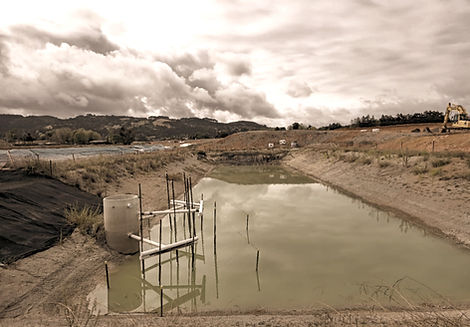
What Is A Sediment Retention Pond?
A sediment retention pond (SRP) is a temporary or permanent engineered basin designed to capture sediment-laden stormwater runoff from construction sites before it can enter natural waterways. Water is held in the pond long enough for sediment particles to settle before the clarified water is discharged.

When Is A SRP Required?
Sediment retention ponds are typically required when earthworks disturb large areas of soil. In Auckland, they are commonly required under Auckland Council GD05 erosion and sediment control guidelines for sites larger than 0.3 hectares or where runoff must be managed before leaving the site.
Our Experience
At our Drury project, we installed 8 sediment retention ponds alongside 2 diversion earth bunds (DEBs) and over 2km of super silt fence — all delivered to schedule and passed council inspection on the first visit. This is the standard we bring to every project, large or small.


Why SRP's Matter?
Sediment discharge is one of the most heavily regulated aspects of construction in New Zealand. Regional councils — including Auckland Council and Waikato Regional Council — impose strict limits on turbidity levels in stormwater discharge.
If sediment control ponds are no installed, the site may receive a non- compliance notice from council. This can lead to:
-
Stop-work notices
-
fines or enforement action
-
Required remediation work

Why Does It Matter To Do It Right?
A correctly designed and installed SRP is often the only compliant way to meet these standards on large sites. An incorrectly sized or installed SRP can lead to consent non-compliance, enforcement action, and significant project delays. Getting this right from the start is essential.


How Does A Sediment Retention Pond Work?
A sediment retention pond works by:
-
Capturing runoff from distrubed areas
-
Slowing the water flow inside the pond
-
Allowing sediment particles to settle to the bottom
-
Releasingcleaner water through a controlled outlet structure such as a T-bar decant system
Many ponds also use chemical flocculation systems to improve sediment settling.

What Size Should A Sediment Retention Pond Be?
Under GD05 guidelines, sediment retention ponds are typically designed with a minimum storage volume of 2% of the contributing catchment area.
For example:
Catchment area Minimum pond volume
1 hectare 200m3
2 hectares 400m3
5 hectares 1000m3
However final design depends on the site slope, rainfall risk, and soil type.


What Is A T-Bar Decant System?
T-bar decant system is the outlet structure used in sediment retention ponds. It draws water from below the surface where sediment levels are lower, allowing cleaner water to discharge while keeping floating sediment and debris inside the pond.

Do SRP's Need Regular Maintnance?
Yes. Regular maintenance is essential to ensure the pond functions properly.
Typical maintenance includes:
-
Removing accumulated sediment
-
Checking inlet and outlet structures
-
Inspecting anti-seep collars and pipe seals
-
Maintaining emergency spillways
-
Monitoring water clarity
Can Chemical Flocculation Be Used In Sediment Retention Ponds?
Yes. Chemical flocculation systems (such as polymer dosing systems) are commonly used in sediment retention ponds to bind fine particles together so they settle faster.
This is especially useful for clay soils, which can stay suspended in water for long periods.